
Choosing a China CNC prototype supplier online comes down to a simple reframing: you are not judging a factory, you are judging documents. A real shop can produce a verifiable legal entity, certificates with numbers you can check, a physical address, sample inspection evidence, and coherent technical answers — all from a screen. A reseller or a fly-by-night operation cannot produce those same documents without borrowing someone else's. This article gives you a 30-minute screening sequence that sorts the two, and the follow-up questions that confirm the choice before you send a single file.
The sequence is simple enough to run as a checklist. The first five minutes go to the legal entity and the address — pull the registration name and check the location on a mapping service to confirm it is a real industrial address rather than a letterbox. The next five go to the certificates: request numbers and verify each one at the registrar while you wait for the reply. Ten minutes go to the document and evidence request — certificate copies, one dimensional report, one material certificate, one example job — plus the four technical questions sent in the same message so the supplier answers them in one pass. The final ten minutes are for reading the responses against the red flags below and, if the shop survives, sending the NDA and a sample RFQ. Thirty minutes, five deliverables, zero plane tickets.
1. What can you actually verify about a supplier without visiting the factory?
Start with the things that cannot be faked cheaply. The legal entity: the company name, its registration number, and the registered address. The certificates: ISO 9001:2015 and related quality documents carry certificate numbers that a third-party registrar issued and can verify. The physical location: a real street address in an industrial area, not just a city name. And the equipment and inspection claims, which you cannot verify from a screen but can at least pressure-test by asking for evidence tied to specific parts.
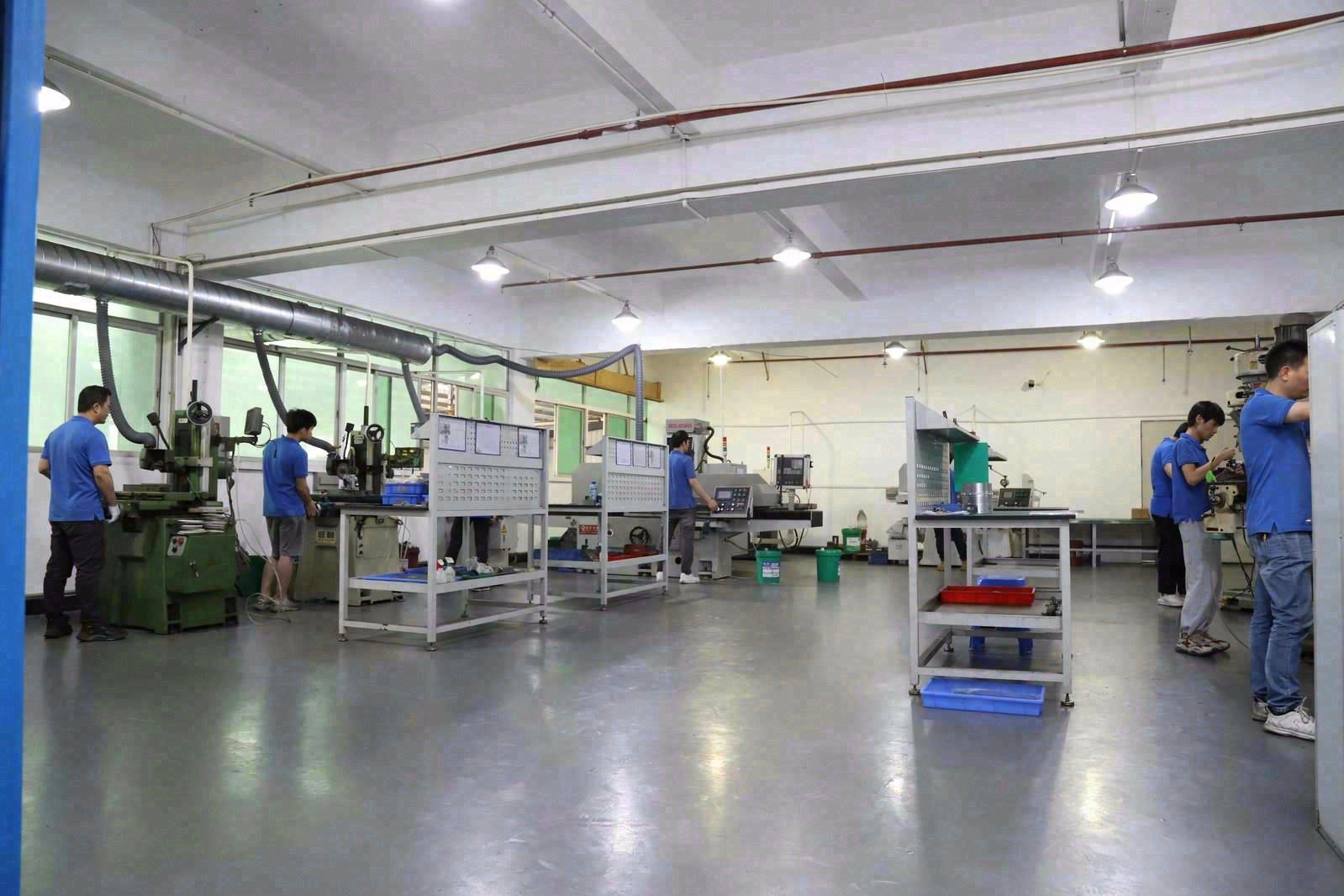
The discipline is to keep verification and marketing in separate boxes. A website that says a factory holds certain certifications is marketing until the certificate number checks out at the registrar. A page full of machine-brand logos is a list, not proof. What you want from the screen is a short list of documents — entity registration, certificates, address — that you can then verify independently. Everything else is context until the sample ships. The factory page for this shop shows the kind of entity and address detail a buyer should expect to see before the first quote.
2. Which documents should a supplier produce without hesitation?
In the first exchange, ask for five things and time the response. A copy of the ISO 9001:2015 certificate (and IATF 16949:2016 (product design excluded) and ISO 14001:2015 if the supplier claims them) with the certificate number visible; the legal entity name and registration; the full factory address; one example of a dimensional report from a past job; and one example of a material certificate. A real shop keeps these on file because it generates them routinely. A trading company has to ask its factory for them, and the delay and the inconsistency tell you which one you are dealing with.
Pay attention to whether the name on the certificate matches the name you are invoiced by. China machining is full of brands that are not legal entities — the brand on the website may be a trade name while the certificate, the business license, and the invoice belong to a different company. That is not automatically a problem, but it must be explained, not discovered. If the certificate names one company and the quote comes from another, ask how the two are related before you discuss price. The FAQs page for this site answers exactly these entity and certificate questions the way a buyer should ask them.
3. How do you check the certificates are real from your desk?
A certificate is a claim until you verify it, and verification takes about two minutes per document. Take the certificate number and the registrar's name, then look the number up on the registrar's public records. Confirm three things: the certified organization name matches the legal entity you are dealing with; the certificate is currently valid, not expired or suspended; and the scope covers what you are buying — machining, not just trading. If the supplier is certified under ISO 9001:2015 and IATF 16949:2016 (product design excluded), check each number separately.
Two shortcuts make this faster. First, ask the supplier to name the registrar rather than hunting for it — a real shop knows who audits it. Second, treat any reluctance to share the certificate number as the end of the discussion, not the start of a negotiation. There is no legitimate reason for a certified shop to hide a number that its registrar publishes anyway. If the certificate cannot be verified, the quality system behind it is an assumption, and assumptions are a poor basis for the first prototype order.
Use the mapping tools you already have for the address check. Search the street address and look at what is actually there: a factory cluster with buildings and loading bays reads differently from a residential block or a shared office. Cross-check the address on the website against the address on the business registration and on the certificate — three documents that cannot agree on where the factory is have told you something important. This takes two minutes and it is the cheapest due diligence in the whole selection process. A shop that is where it says it is, and can prove it with documents that match, has cleared the first and most common failure mode in online sourcing.
4. Which four questions should the first 30-minute call cover?
Use the call to test technical depth, not to collect brochure facts. Four questions do most of the work. First, which materials and tolerances do you machine every day, not occasionally? Listen for concrete answers — a machinist talks about 6061, 304, 17-4PH, and the ±0.003 mm milling and ±0.002 mm grinding envelope naturally, while a reseller talks about "any material you need." Second, what happens when a drawing revision arrives after programming? The answer separates a shop with process control from one that wings it. Third, which inspection reports ship with the parts, and who measures the critical dimensions? Fourth, can you show one past job with photos, the drawing, and the CMM report together?
The fourth question is the most revealing. A shop that can assemble a drawing, its machined part, and its inspection report into one coherent example is showing you its actual process. A supplier that sends a folder of glossy part photos with no reports is showing you its sales material. If the answers are specific and consistent with the documents from the earlier exchange, the shop moves to the shortlist. If the call sounds like a recitation of the website, you have saved yourself a prototype order's worth of trouble. The quality page for this shop documents the inspection reports a real prototype order generates.
5. Which red flags should end the conversation immediately?
- No legal entity. Cannot or will not name the company behind the brand, or the name shifts between the website, the quote, and the certificate.
- No verifiable certificate. Quality claims without numbers, or a number the registrar cannot confirm.
- No NDA. Refuses to sign a simple non-disclosure before receiving your CAD files.
- No process answers. Responds to revision-handling and inspection questions with assurances instead of procedure.
- Impossible promises. Delivery dates with no process behind them, or tolerance claims with no measurement evidence to match.
- Price games. A quote that moves materially when you ask what the inspection reports cost, or what shipping is included.
None of these red flags is subtle, and each one is cheap to discover on day one. The mistake buyers make is not failing to spot them; it is spotting them and continuing anyway because the price is low or the reply was fast. A prototype supplier is selected for one order at a time, and the first order is the cheapest time to walk away. Walk away early and the only cost is thirty minutes.
6. How do you compare quotes from two Chinese prototype shops fairly?
Prototype quotes look simple and are anything but, because the specification quietly decides the number. Two shops can quote the same part at very different prices because one assumed a general tolerance of ±0.1 mm and the other priced your critical features at ±0.003 mm with CMM reports, or because one included surface finishing and the other quoted raw machined parts. Before comparing prices, fix the specification: the same material grade and condition, the same tolerance call-outs, the same finish, the same inspection deliverables, and shipping included in both.
Then ask each shop to state its default for un-dimensioned features — the tolerance it applies to radii and hole positions that carry no call-out on your drawing. That single question explains more price difference than any other. Also ask whether the quoted price includes the material certificate and dimensional report, because on a prototype those documents are not free overhead; they are part of the deliverable. When both quotes sit on the same specification, compare them on capability and communication — who asked better questions about the drawing, and whose answers were more specific. A supplier that interrogates your drawing before pricing it is a supplier that will catch problems before they become rejected parts.
7. What sample-work evidence should you request before you commit?
Before the first production-sized order, ask for one complete example: a past job where the supplier can show the drawing, the finished part, and the inspection report together. Check that the report names the drawing revision, lists each measured feature against its tolerance, and shows the instrument used. A report that cannot be tied to a drawing is not evidence; it is decoration. This single artifact tells you how the shop measures, which is the real risk on a prototype order — the machining is usually the easy part.
The stronger version of this step is to order a sample of your own part. Send a drawing with at least one dimension that matters, ask for the CMM report and the material certificate to ship with the sample, and check the numbers against the drawing when it arrives. Treat the sample order as a paid audition: you are buying one part and one inspection record, and the record tells you whether the shop can be trusted with a batch. If the sample matches the report and the report matches the drawing, you have moved from trusting a website to trusting a measured result.
8. What should you settle about IP, payment, and communication before sending files?
Prototype files are your design, and they travel before you have any history with the supplier, so the safeguards go in before the CAD. Sign an NDA first, then send a STEP or IGES model plus a toleranced PDF drawing, and state in writing that the files are for this order only. Watermark PDF drawings circulated before the NDA is signed. On the payment side, agree the terms, the currency, the bank details, and who pays for what if the parts are rejected — before the order, not after a dispute. On communication, agree the language of the records and the response-time expectation, because a prototype program lives or dies on the speed of the question-answer loop.
None of this requires a lawyer on every order; it requires that the terms exist in writing. A serious supplier has handled NDAs and standard purchase terms with buyers on other continents and will sign yours or propose equivalent ones without drama. A supplier that hesitates on an NDA or insists on unusual payment terms has answered the screening question for you. When the terms are clean and the documents have checked out, the 30-minute screen is done, and the prototype order that follows is a technical decision, not a gamble.
Finally, shape the first order to keep the exposure small while the relationship grows. A single prototype part, or a handful of parts, is enough to test the shop's machining, inspection, and communication on your actual drawing — it is not the moment to commit a whole product family. Agree in advance how a revision is handled and what a re-run costs, so the second order inherits the terms of the first instead of renegotiating them. Suppliers are selected one order at a time, and the cleanest way to choose is to make the first order small enough that a mistake is affordable and informative rather than catastrophic.
The buyer's rule of thumb: thirty minutes buys you documents, and documents decide who gets the prototype order. Entity, certificates, address, an example job with its inspection report, and four technical questions — if those check out, the factory visit is a confirmation. If they do not, no visit will fix them.
Frequently Asked Questions
Can I really evaluate a factory in China without visiting it?
You can screen a supplier rigorously from your desk by checking documents rather than impressions: the legal entity and registration, certificates with numbers you can verify at the registrar, a real address, and sample inspection evidence. A visit adds confidence later, but the documents decide who is worth visiting.
What is the fastest way to check a China CNC prototype supplier's certificates?
Ask for the certificate number and the registrar, then look the number up on the registrar's public records. Confirm the certified name matches the legal entity you are dealing with and read the scope. A supplier that will not provide a number you can verify has told you what its quality system is worth.
What should I ask in the first 30-minute call?
Ask which materials and tolerances they machine daily, how a drawing revision is handled, which inspection reports ship with parts, and for one example job with photos, the drawing, and a CMM report. Those four answers separate a machine shop from a middleman faster than any brochure.
What red flags should end the conversation?
A supplier that cannot name its legal entity, will not share a certificate number, refuses a simple NDA, promises delivery dates with no process behind them, or answers technical questions with marketing sentences. Each is cheap to spot and expensive to ignore later.
How do I compare quotes from two Chinese prototype shops fairly?
Quote both against the identical drawing package — same material standard, same tolerances, same finish, same inspection deliverables, shipping included. Ask each to state its default tolerance for un-dimensioned features. A low price on a different specification is not a low price; it is a different product.
Should I order a sample before committing to a production supplier?
Yes, and treat the sample order as a paid audition. Send a part with at least one tight dimension, ask for the CMM report and material certificate with the parts, and check the report against the drawing. The sample tells you how the shop inspects, not just how it machines.
What should I settle before sending my CAD files?
The NDA, the file format, and what the supplier may do with the data. Sign the NDA first, send STEP plus a toleranced PDF, and agree your files are used only for your order. Watermark drawings you circulate before the NDA is signed.
Want to run the 30-minute screen against a real shop?
Ask for the certificates, the entity details, and a sample CMM report through the contact page — everything a buyer should see before sending a drawing.