
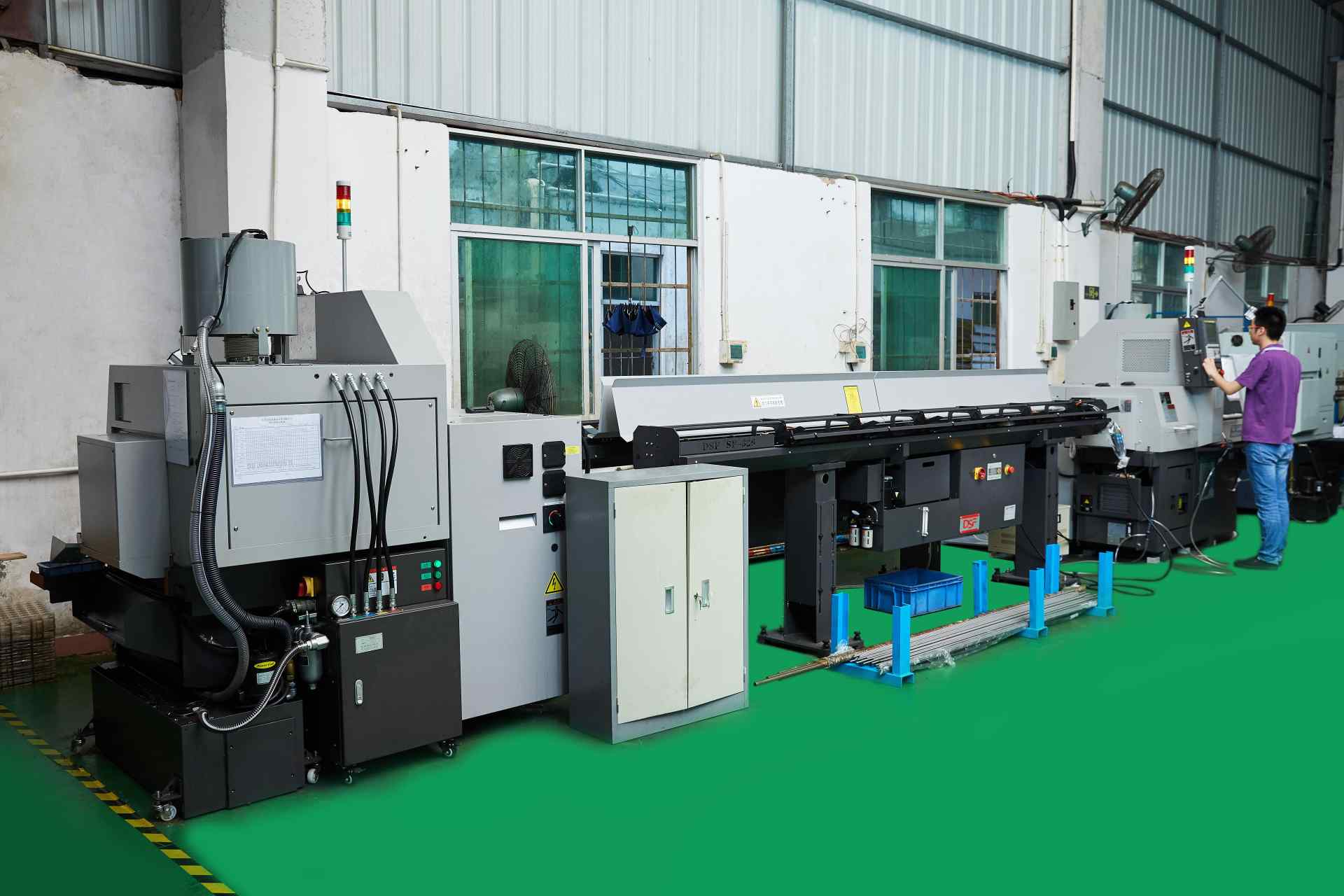
The honest answer to "how much does a China CNC prototype cost?" is that the price is set by your specification, not by the geography. A machined prototype is the sum of five levers — geometry, material, tolerance, finishing, and quantity — and every dollar on the quote traces back to one of them. China shifts the base rates, but it does not change the shape of the cost: the same part quoted in a high-cost country and in China differs by the machine-hour and labor rates, not by the levers. This guide explains where the money goes on a prototype quote, which decisions move the price most, and how to structure your RFQ so the quotes you receive are actually comparable.
What is a prototype quote really pricing, and why does it look the way it does?
A CNC prototype has no die or mold, so there is no tooling line on the quote. What replaces it is the fixed cost of proving the process: programming the part, making or selecting fixtures, and setting up the machine. On a production run those costs spread across thousands of parts and shrink to almost nothing per unit; on a single prototype they sit in full on one piece. That is why a one-off costs far more per part than the same geometry at volume, and why the MOQ of 1 is a meaningful service rather than a marketing line — it lets you pay the true cost of validation without being forced to buy volume you do not need.
The quote itself should read as a list, not a lump. Material in its form, machining by operation, finishing, heat treatment, inspection, and packaging should each have a line, because each line is a lever you can pull. When a quote arrives as a single number with no breakdown, you cannot see where the cost sits or what to change; when it is itemized, you can question each element by name. A supplier that itemizes and flags the cost drivers is doing cost engineering; one that hides them in a lump is making you guess.
Which cost levers move a prototype quote the most, and what can you actually control?
Five levers set the price, and knowing which one dominates your part tells you where to negotiate. The table below maps the levers to what they control and the decision that moves them.
| Cost lever | What it controls | The decision that moves it |
|---|---|---|
| Geometry and operations | Number of setups, operations, and machine hours | Feature count and reachability — fewer setups means less cost |
| Material | Raw stock price and cycle time | Alloy and condition — the grade you specify sets the base |
| Tolerance | Finishing passes, machine time, inspection | Which features carry the tight band, not how many |
| Finishing and heat treatment | Process steps and minimum batch costs | The finish your prototype actually needs for its purpose |
| Quantity and revisions | How the fixed costs spread | How many parts and how many drawing changes |
Two patterns dominate prototype quoting. First, the geometry and material levers usually set the base, and the tolerance and finishing levers are where quotes balloon, because they add machine time, metrology, and process steps on top of a base that was already priced. Second, the cheapest lever to pull is the one that removes a requirement: a tolerance that does not need the tight band, a finish that does not need the extra class, an operation that a small design change eliminates. Every requirement you relax is a cost reduction you keep.
How much does material choice move the quote?
Material sets the raw stock price and the cycle time, and on a prototype the effect is amplified because you buy the stock in full whatever its size. Aluminum is the economical baseline — 6061-T6 cuts fast, machines cleanly, and holds threads well, which is why most first prototypes are aluminum regardless of the eventual production material. Stainless steel costs more per kilo and cuts slower, with 303 at the free-machining end and 316L tougher but more corrosion-resistant. Alloy steel and 17-4PH add heat treatment to the route; titanium multiplies both material cost and cycle time; and the engineering plastics sit at their own price points, with PEEK approaching metal prices.
Two rules keep the material lever honest. First, on a prototype, specify the material you intend to produce in, not the cheapest that will pass the bench test — a prototype in 6061 tells you nothing about how 17-4PH will machine or how titanium will behave in a thin wall. Second, buy the material as a finished dimension: a small bar or plate that matches the part's envelope costs less than a larger stock size that leaves most of its value as chips. A supplier that asks about the prototype's production intent is engineering the test properly; one that quotes whatever grade is cheapest may be saving you money now and costing you a redesign later.
How much do tolerance callouts add to a prototype?
Tolerance is the lever where cost rises fastest, because every step tighter multiplies the price in several places at once. A general tolerance runs on normal feeds and a standard inspection pass. A critical feature at ±0.003 mm needs finishing passes, careful setup, and a CMM measurement with a recorded value; a feature beyond the machining band needs a grinding operation at ±0.002 mm, which is a different machine class and a different price. The reference points are fixed — machining holds fit and alignment features to ±0.003 mm, precision grinding reaches ±0.002 mm, and capability of Cpk 1.67 or higher is the standard on key characteristics — and the drawing should spend that capability only where function demands it.
The drawing convention that keeps prototype cost sane is a block general tolerance with a short list of specific callouts. Features that mate, seal, or rotate earn the tight band; the general envelope does not, and putting the band on it buys nothing but slower production and a longer inspection report. When a supplier's DFM review flags a tolerance as over-tight, it is not asking you to lower quality — it is asking whether that feature actually needs the band, and the answer decides whether the quote stays flat or climbs.
Why is finishing and heat treatment such a large share of a prototype quote?
Finishing processes carry costs that have nothing to do with the part size. Anodizing a single bracket still pays for the rack and the process run; plating a small batch pays the setup of the line; heat treatment adds its processing and its certificate. On a production run those costs amortize across many parts, but on a one-off prototype the finishing line can rival the machining line. That concentration is why the finishing specification deserves as much attention as the geometry — a needless cosmetic treatment can double a prototype's price.
Match the finish to the prototype's purpose. A functional test part that will be measured and discarded does not need the cosmetic anodize class a customer demo requires. A corrosion test does need the real treatment, because an uncoated prototype will not predict the coated production part. A prototype that must validate threads or fits after plating needs the dimensions adjusted for the coating thickness. When you write the finish callout, state the purpose: the supplier can then recommend the cheapest treatment that serves it, and the quote stops paying for finish you did not intend.
How should quantity and revisions be priced on a prototype order?
Quantity spreads the fixed costs. One part carries the full programming and setup; five parts divide it five ways; twenty parts divide it further, though the machine time still dominates on a complex geometry. The practical move is to quote two quantities at once — the single validation part and the small batch you may actually order after the design is confirmed — because the gap between the two unit prices is the amortization curve, and it tells you how cheaply the second iteration can run.
Revisions are the cost that surprises buyers. Each drawing change after the first program means a new program edit, a new first article, and often a new inspection, and on a prototype the cost of a revision can approach the cost of the original part. The way to control it is to batch your changes: confirm the design as fully as you can before the first quote, and group any revisions into one release rather than emailing drawing updates one at a time. A prototype is cheap precisely because a mistake costs one part; a stream of revisions turns it into a series of one-offs, each priced like the first.
How does sourcing from China change the cost math for a prototype?
China shifts two numbers in the prototype cost equation: the machine-hour and labor rates, and the logistics cost and time around them. The machining itself typically prices lower per hour, which matters most on parts with long cycle times — the more machine time a prototype consumes, the more a rate difference matters. The offsetting costs are freight, the time in transit, and the iteration cost of working across time zones: a design change that takes an afternoon with a local shop takes a day or more in the round trip to China. For a single simple prototype, logistics can erase the advantage; for a complex part with hours of machining, or for a series of prototypes through a program, the rate advantage compounds.
The numbers worth comparing are the landed ones: unit price plus freight, plus the value of your time in the iteration loop. A prototype program with several revision rounds changes the calculus, because the machining rate advantage applies to every round. The practical pattern is to prototype locally when speed-to-iteration dominates and the part is simple, and to move to China when the geometry is complex, the machining content is high, or the program is large enough that the rate advantage compounds across many parts and rounds. Ask the supplier for a landed-cost estimate and compare it against your local quote at the same specification — the answer is usually clear once both are on paper.
How do you get a comparable, cost-driven prototype quote?
The quality of the quote depends on the quality of the input. Send the model and the 2D drawing at a named revision, with the material grade and condition, the tolerance callouts that matter, the finish by class, and the quantity and target date. Ask for the quote structure to show material, machining, finishing, inspection, and any one-time items on separate lines, and ask the supplier to flag which features are driving the cost and which callouts you could relax without changing the part. A supplier that answers with a DFM note — "this corner radius needs a smaller tool," "this tolerance is cheaper at the general band," "this finish does nothing for a functional test" — is engineering your cost.
Then compare like for like. Send the identical package to three suppliers and read the spread between the quotes: a tight spread means the market agrees on the price and you are comparing execution; a wide spread means someone has misread the drawing or the specification, and the outlier needs a question, not a celebration. Confirm the quotation in writing with a validity period and the Incoterm stated, and lock the documentation list so the final invoice cannot grow with unagreed extras. The parts guide shows how material, tolerance, and finish land on a quoted prototype, and the FAQs cover quoting, certifications, and documentation on this site.
Frequently Asked Questions
What is a realistic range for a CNC prototype from China in 2026?
There is no single number, because the price is set by five levers — geometry, material, tolerance, finishing, and quantity — not by geography. A small simple aluminum part with a standard finish lands at the low end; a complex multi-operation titanium part sits far higher. The reliable way to find your range is to quote the identical specification from three suppliers and read the spread.
Why does a single prototype cost more per part than a production run?
Because the fixed costs — programming, fixturing, and setup — spread across one part instead of thousands. A production quote amortizes them over the batch; a prototype carries them in full. That is why the MOQ of 1 is meaningful: you pay the true cost of proving the process without buying volume you do not need.
Do I pay tooling for a CNC prototype?
No. CNC machining has no die or mold, so there is no tooling to amortize. A prototype quote may carry programming and simple fixtures as one-time items, and a transparent quote shows them on their own lines. That is one economic advantage of machining a prototype instead of tooling a casting or molding.
How much can tightening a tolerance add to a prototype?
Every step tighter multiplies cost in several places — slower feeds, finishing passes, in-process measurement, and a CMM run to prove the band. Machining holds fit and alignment features to ±0.003 mm and grinding reaches ±0.002 mm, but those bands belong on the features that control function. Going to ±0.003 mm everywhere turns a machining job into a metrology exercise.
Is finishing a large share of a prototype quote?
Often, yes — anodizing and plating carry minimum batch costs, and heat treatment adds processing and certification. On a single prototype the finishing line can rival the machining line. Specify the finish your prototype actually needs: a functional test part may not need the cosmetic treatment a customer demo does.
How do I compare quotes from Chinese suppliers fairly?
Send the identical package and demand the same quote structure, with material, machining, finishing, and inspection on separate lines. Compare total delivered cost including freight, not unit price in isolation. A quote that itemizes and flags cost drivers is comparable; a lump sum is not.
Why did my quote go up between email and the formal quotation?
Because the specification was incomplete at first contact — a material condition not named, a finish without a class, a tolerance not stated. Each gap forces the supplier to assume, and assumptions usually land on the conservative side. Complete the specification and the quote stops moving.
Have a prototype drawing you want priced with the cost drivers shown?
Email [email protected] or call +86 13126536955 for a DFM review and an itemized quote that shows where the cost sits.