
Sourcing CNC Prototypes in China: What to Verify Before You Pay
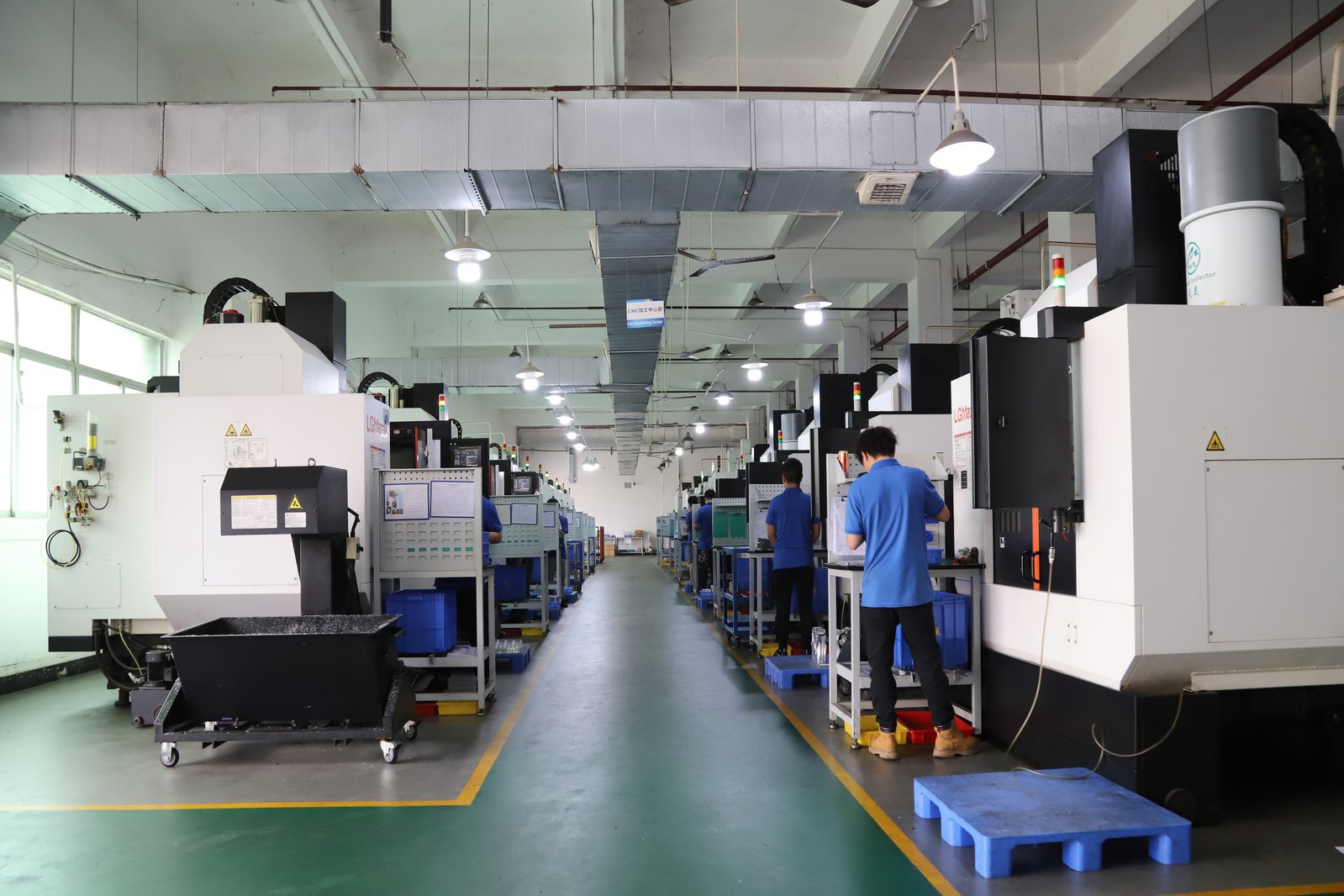
Buying a prototype from a CNC shop in China is different from buying production parts, and the difference changes what you verify. A prototype exists to answer a question — does the design work, does it assemble, does it test — and the buyer is paying for speed, iteration, and honest feedback more than for repeatable process control. The supplier that serves prototyping well is quick, direct, and comfortable with change; the supplier that treats every prototype as a small production run will be slow, bureaucratic, and wrong about what you need. This guide covers the verification points specific to sourcing prototypes.
What should you verify about a prototype supplier's actual experience?
Prototype machining is a specialty that looks like general machining but is not. Ask how much of the supplier's work is prototypes and small batches rather than production, because the proportions shape behaviour: a shop whose floor runs on production orders will schedule your prototype around its production, while a prototype-focused shop schedules its floor around exactly your kind of work. Ask for examples of prototype projects that resemble yours — similar part size, similar material, similar number of iterations — because relevance beats volume.
Experience also shows in how the supplier handles the parts of prototyping that production shops find awkward: partial quantities, incomplete drawings, designs that change mid-project, and materials that appear once and never again. A supplier that lists a wide material range is table stakes; what separates the prototype shop is the willingness to machine a single piece of an unusual alloy and the honesty to tell you when a design needs a different process entirely. Ask directly what happens when a drawing changes after the order starts, and listen for the supplier that treats the change as a normal event rather than a problem.
Material experience deserves its own probe because prototype materials are often the ones that appear once in a blue moon — the alloy sampled for a single concept, the medical-grade plastic tried in one revision. A supplier whose floor is used to odd lots handles these without drama, because it is not optimising for material utilisation; it is optimising for getting you an answer. Ask which materials the supplier has cut in the past year beyond its catalogue, and treat the length of that list as a signal of flexibility rather than an oddity.
How do you judge whether the supplier will iterate well with you?
Prototyping is iterative by nature — the first version exists to be examined, criticised, and changed — so the supplier's iteration behaviour is the core capability to verify. The test is conversational: ask what happens after the first prototype ships and the buyer finds a clearance problem. The right answer describes a loop — the buyer sends the change, the supplier updates the program, a new part is made quickly, and the cost of the change is handled transparently. The wrong answer describes a blame conversation or a re-quote for every modification, which turns an iterative design process into a commercial battle.
Speed is part of iteration capability, and it is worth probing before you commit. Ask for the realistic turnaround on a single prototype of your part type, and compare it with the production quote for the same part. A prototype supplier should be markedly faster on single pieces because it runs a floor organised around quick changeovers. Watch also for the supplier that quotes a prototype and a small-series price together, because a shop that understands prototyping knows the question is always "what does this cost per version, and what does it cost when the versions stop."
Which documents should protect the design before you send it abroad?
Sending a prototype drawing to China means sharing a design that may still be changing, so the documentation habits matter from the first file. Agree the design ownership in writing before sending anything sensitive, and keep the exchange disciplined: number your drawing revisions, name the file revision in every message, and confirm which revision the supplier is working to at any moment. Prototype projects fail on version confusion more than any other single cause, because the design moves while the machining does not wait.
For genuinely proprietary designs, consider what you actually need to share. A prototype quote often needs only the geometry and the tolerances that matter; the assembly context, the function, and the end customer belong in your file rather than the supplier's. An NDA covers the legal side of the exchange, but the practical protection is sharing deliberately. Suppliers that serve international prototyping customers handle build-to-print and partial information every day, and a good one will tell you what it needs rather than asking for everything it could use.
Agree the format of the technical exchange while the relationship is young. Some buyers work best with a marked-up drawing returned by the supplier; others prefer a written note list with the changes itemised. The format matters less than the habit of keeping every version decision in writing, because the written trail is what lets the supplier machine revision C while you verify that revision C is what you meant. Establish the revision discipline on the first order and the rest of the relationship runs on a track instead of being improvised.
What should a prototype quotation include beyond the price?
A prototype quotation is a plan as much as a price, and it should carry the elements that tell you the supplier has thought about the job. Look for the material and the drawing revision it prices, the expected number of versions or the cost per additional iteration, the lead time for the first part, and the finish or post-processing that is included. A quote that offers a single number for a single part with no mention of iteration is a quote written for a different kind of order than the one you are placing.
The quotation should also make the commercial structure of iteration visible, because that structure decides whether you can afford to iterate. Some suppliers price each design change as a new order; others quote a prototype package that includes a reasonable number of revisions. Neither is wrong, but the structure changes your behaviour — a buyer paying per change will hoard changes into one expensive version, while a buyer inside a package iterates freely and reaches a better design faster. Read the quotation for that structure before you compare it with the next supplier's, because the comparison only makes sense on the same terms.
How should you verify the first physical prototype when it arrives?
The first prototype is evidence, and it should be examined like one. Check it against the current drawing revision — not the revision you emailed first, but the one the supplier confirms it machined — and measure the characteristics that will decide whether the design works: the fits, the clearances, the locations that matter. A prototype that is beautiful but machined to the wrong revision has failed its purpose, and the failure is the supplier's to explain, not yours to absorb.
Beyond the part itself, examine what travelled with it. A prototype shipment should carry the dimensional data on the features that matter, because you are using the part to validate a design, and the data tells you whether an observed problem is a design problem or a machining problem. When a clearance is tight, the measurement tells you whether the geometry is wrong or the tolerance was optimistic. Prototype buyers who demand the data with the part save themselves a full iteration cycle on every borderline result.
One more habit pays off across the whole prototype relationship: ask the supplier to note, on the dimensional data, where the part was machined differently from the drawing's implicit assumptions. A prototype often reveals that a feature cannot be made exactly as dimensioned — the corner radius that needs a smaller tool, the thread depth that needs a longer engagement, the wall that needs support. When the supplier records those deviations as notes rather than silently machining something near, you learn about your design faster than any number of failed prototypes could teach you.
What do you need to verify before the prototype becomes a production order?
The transition from prototype to production is the moment where the most sourcing money is lost, because the prototype's success proves the design, not the production process. Before you place the production order with the same supplier, verify the things the prototype did not test: the supplier's process for holding tolerances across a run rather than on one piece, the documentation that will ship with a batch, the fixture and program strategy that will be used in production, and the capacity to deliver the quantity on the date you need. A prototype made on an engineer's bench proves nothing about a production run made on a scheduled floor.
Ask the supplier to articulate the difference between what it did for the prototype and what it will do for production — the same program is rarely enough. Production parts need process control, inspection sampling, and repeatable setups; the supplier that can name those differences is thinking about production seriously, and the one that says "it is the same job, just more pieces" is the one whose production batch will drift. The production order deserves the verification gates of a new supplier even when the prototype was perfect, because the two orders test different capabilities.
How should payment and shipping work on prototype and small-series orders?
Prototype orders are small enough that the payment structure should be simple — usually a modest deposit with the balance on shipment — but the simplicity should not hide the commercial terms. The incoterm, the shipping method, and the packaging standard belong in writing even on a single-part order, because a prototype that arrives damaged or late has failed at the only job it had. International prototype buyers should confirm the export documentation is complete on the first order, so the learning curve is paid on a small shipment rather than a large one.
For the small-series order that follows the prototype, the payment structure should step up to the evidence milestones of a production order: a deposit tied to material, a stage tied to inspection, and the balance tied to shipment documents. The habit of matching money to evidence, built on a small scale, is the same habit that protects a buyer when the orders grow. Buyers who practice the discipline on prototypes find that the production orders — which arrive later and cost more — run through the same routine without a fight.
Which habits should you build for repeat prototype work with the same supplier?
Repeat prototype work compounds in value, because the second project starts from the supplier's knowledge of your parts, your materials, and your drawing conventions. Build the habits that make repetition smooth: a standing documentation format so every prototype ships with the same kind of data, a standing revision-naming rule so the version history stays readable, and a standing commercial structure so iteration costs are predictable. A supplier that knows your file and your format produces better prototypes faster, and that knowledge is an asset you should protect rather than restart.
Keep the relationship honest by resetting the basics when the work changes shape. A prototype supplier that performs well on single parts should be verified on production capability before a production order, just as a production supplier should be verified on speed and iteration before a tight prototype deadline. The buyer's file on each supplier — what was verified, when, and with what evidence — is the memory that makes these judgments fast and defensible, and it is the same file that turns a sourcing relationship from a series of bets into a managed supply base.
Finally, keep the comparison honest when several suppliers court the same prototype: the supplier that responds fastest with the most specific questions is usually the one that will serve the iteration best, because speed and specificity are the two currencies of prototype work. The lowest quote on a prototype is often the most expensive design process, measured in the weeks it adds to every cycle — an accounting that only becomes obvious after the project has run its course.
Frequently Asked Questions
Should I prototype in China or closer to home?
It depends on what the prototype is for. If it validates an assembly or a test that you must do in person, a local supplier is faster to iterate with. If the prototype is a geometry and finish check for a part that will ultimately be made in China anyway, prototyping with the production supplier removes a translation step.
How many iterations should I expect a prototype to take?
Budget for more than one. The value of prototyping is that the first version tells you what the drawing got wrong, and the iteration cost should be structured so you can afford to act on what you learn. A supplier that treats iteration as normal is a supplier that understands prototyping.
What is the difference between verifying a prototype supplier and a production supplier?
Prototype verification targets speed, iteration behaviour, and honest feedback on a changing design; production verification targets process control, documentation, and capacity across a run. The same supplier may pass one and fail the other, which is why the transition between them is the risky moment.
What documentation should ship with a prototype?
The dimensional data on the features that matter, tied to the drawing revision that was machined. The data is what lets you distinguish a design problem from a machining problem, and it saves a full iteration cycle on every borderline result.
How should I structure payment for prototype work?
Keep it simple — a modest deposit and the balance on shipment — but put the commercial terms in writing even on a single part. For the small-series order that follows, step up to the evidence milestones of a production order.
How do I know if a prototype-focused supplier is actually focused?
Ask how much of its work is prototypes and small batches, and how it handles drawing changes mid-project. The prototype shop schedules its floor for quick changeovers and treats revision as normal; the production shop will schedule you around its production and treat your changes as disruptions.
Looking for a Chinese CNC supplier that treats prototypes like prototypes — fast, iterative, and honest about your design?
Email the model to [email protected] or call +86 13126536955 for the iteration plan and the production-readiness view. The services page, the quality page, and the FAQ page on this site document the routine.