
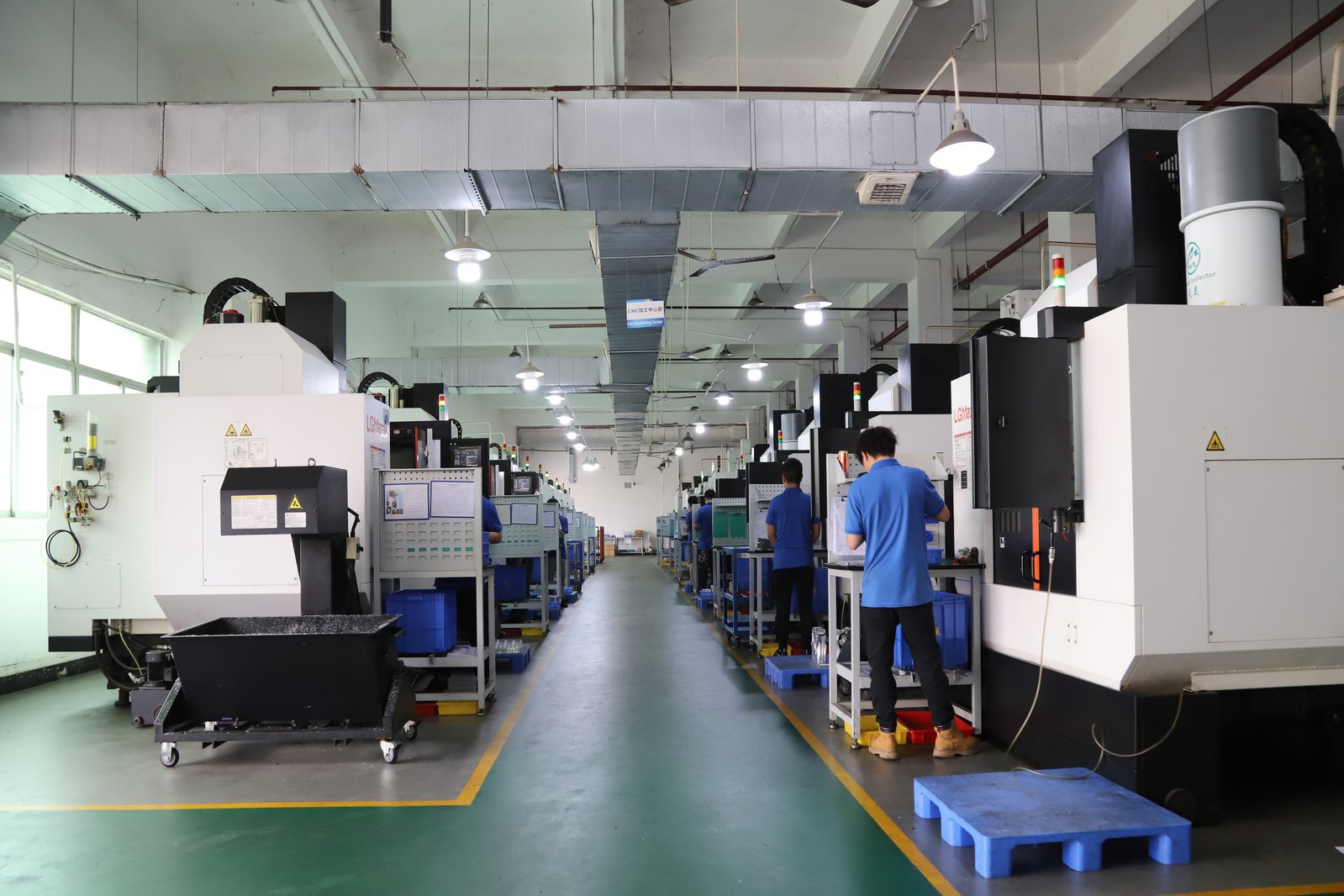
Every prototype buyer asks the same question first: when will I have the part? The useful answer is a tier, not a single number, because a prototype's lead time is set by the real workload — how many operations the geometry demands, whether the material is in stock, whether finishing and heat treatment sit in the route, and how long the inspection takes. Machining shops quote prototypes in bands of roughly 3, 7, or 30 days for exactly this reason: a fixed one-date promise would be a guess, and a guess is the last thing a schedule should be built on. This guide explains what pushes a part into each tier and how you can compress the schedule without cutting the quality that a prototype exists to prove.
What is a realistic lead time for a China CNC prototype, and why is it a range rather than a number?
A prototype quote should name a tier and the workload that puts the part in it. The three-day tier belongs to simple parts with few operations — a bracket or a plate in a standard material, machined in one or two setups with no finishing beyond the cut surface. The seven-day tier covers the typical prototype: more features, more operations, maybe a modest finish, material that is readily available. The thirty-day tier is where complex parts live — many operations, surface finishing, heat treatment, or an exotic alloy — because each added step adds setup, processing, and inspection time that a shorter promise cannot honestly absorb.
The range exists because the supplier cannot quote a meaningful date until it has counted the steps. Counting operations is what the DFM review does at quoting: how many setups, how many tools, whether a feature needs a grinding pass, whether the finish is in-house or at a processor. Once the steps are counted, the tier is honest, and the date that follows it is one the shop can hold. A supplier that quotes a single flat number for everything is either averaging the worst case into every part or about to miss your date; the tiered quote is the one that tells you the truth about your specific geometry.
Which part characteristics push a prototype into a longer tier?
The first driver is the number of process steps, and the second is their sequence. A part that turns, then mills, then grinds, then gets a finish carries more operations than a single-setup part, and each operation is a setup, a run, and an inspection point. The table below maps the common characteristics to the tier they usually land in.
| Part characteristic | Typical tier | Why |
|---|---|---|
| Simple prismatic shape, one material, no finish | About 3 days | One or two setups, standard stock, no secondary steps |
| Standard prototype with moderate features | About 7 days | More operations and tools, routine inspection |
| Many operations, thin walls, tight callouts | Toward 30 days | Careful sequencing, more machine time, more inspection |
| Surface finishing or heat treatment in the route | 30-day tier | Processor queues, transport, and post-treatment work |
| Exotic or special-order material | 30-day tier or longer | Material procurement sits ahead of machining |
Two patterns matter for planning. First, complexity is the driver, not volume — a one-off complex part needs the same 30-day window as a small batch of the same geometry, because the schedule is set by the work, not the count. Second, the tier is usually decided by the single slowest step: a part that machines in two days but needs a plated finish can land in the 30-day tier because the plating step, not the machining, owns the schedule. Ask which step owns your date — the answer tells you where the time is going.
How much does material availability affect the date?
Material is the first thing that can stretch a prototype schedule, because the stock has to exist before any machining starts. The standard alloys — 6061 aluminum, 303 and 304 stainless, 12L14 steel, brass — sit in stock at most shops, and a prototype in one of those can start the moment the program is approved. The moment the drawing names a special-order alloy, a non-standard diameter, or a material that must be certified to an aerospace spec, procurement time enters the schedule ahead of the machining, and the quoted tier has to account for it.
The buyer's lever is to check material availability at quoting. Ask which alloys are in stock and whether your material is one of them; if it is not, ask the procurement lead time and let it shape your date rather than discovering it after the order. On a functional prototype, also weigh whether the production material is truly required at the prototype stage. A test that validates geometry and assembly can often run in a standard stock grade while the material-specific validation waits for the first article in the production alloy — a decision that can move a prototype from the 30-day tier to the 7-day tier without losing the information you need.
When does finishing and heat treatment add days, and what is the honest sequence?
Finishing and heat treatment are the quiet owners of many prototype schedules, because they are usually specialist processes with their own queues. Anodizing and plating are commonly run by dedicated processors; heat treatment has its own cycles — age-hardening 17-4PH is not an overnight step. The sequence compounds the time: the part machines, travels to the processor, waits in the processor's queue, is processed, returns, and then gets any post-treatment machining and the final inspection. A single finish can add more days to the schedule than a week of machining.
The honest schedule names that sequence rather than hiding it. Ask whether the finish is in-house or at an approved processor, what the processor's lead time is running, and whether any work follows the treatment — a passivation step at the end of the route is faster than a plating step that precedes a thread check. And question whether the finish is needed at the prototype stage at all: a functional test part that will be measured and revised does not need the production anodize class, and removing it from the route can collapse the schedule. The finish is added when the prototype's purpose demands it, not because the production drawing says so.
What role do revisions and drawing changes play in the prototype schedule?
A prototype schedule is designed around a frozen drawing, and every change after the program starts resets part of the clock. A revision that moves a hole or changes a feature means a program edit, a new first article, and usually a new inspection, and depending on where the change lands, the part may need to re-enter the queue for the operation it affects. The cost in time is often larger than the cost in money, because the schedule was built on the assumption that the geometry would hold.
The control is process, not hope. Freeze the design as fully as you can before the first quote, and route any remaining changes through a single revision rather than a stream of emails, so the supplier edits the program once instead of five times. When a revision is unavoidable, ask what it does to the date before you send it — the supplier can usually tell you whether the change moves the part to a new tier or simply extends the current one. A prototype is cheap because a mistake costs one part; a stream of revisions makes it expensive because every round-trip costs schedule.
Add one planning number that no quote shows: the buffer between the promised date and the date your program actually needs. Prototype schedules are honest estimates of the work, but they assume the drawing stays frozen, the material arrives on time, and the processor runs to plan — each an assumption that can slip. A short buffer between the quoted tier plus freight transit and the date you commit to your own stakeholders absorbs the first slip without turning it into a crisis, while a program planned to the exact quoted day turns every small delay into an emergency. Set the internal target from the quoted tier plus transit plus the buffer, and treat the quoted date as the working date, not the absolute deadline.
Why does the inspection step take time on a prototype, and what arrives faster?
A prototype is measured more thoroughly than a production part, because it is the first article and the evidence for everything that follows. The key characteristics get a CMM run with recorded values, threads get their gages, surface finishes get measured, and the report has to be produced and checked against the drawing revision. On a complex part that inspection is real time — probing angled features in the datum frame is not a quick pass — and it sits at the end of the route where any finding means a return to the machine.
That is also where a prototype can arrive faster without cutting quality. The inspection effort should concentrate on the features that the prototype must prove — the ones that control fit, function, and assembly — while the general envelope runs a lighter check. A drawing that lists its key characteristics explicitly lets the supplier plan the inspection to the risk instead of measuring everything to the same depth. When you see a quote that promises the same speed as a simpler part, ask which features will actually be measured; the answer tells you whether the schedule is realistic or whether the inspection was quietly dropped.
How can you compress a prototype lead time without sacrificing quality?
The fastest compression comes from removing steps, not from rushing them. Run the DFM review with the schedule in mind: every operation that a small design change eliminates is a day or more of schedule recovered, and the features that fight the process — a thin wall, a deep pocket, an over-tight tolerance — are exactly the ones the review should flag. Approve the material and the finish at quoting so no procurement or processor decision waits on a later email, and confirm the documentation list so the report is produced to your template on the first pass.
Then look at parallelism. A program with several prototype parts can ship what is ready while the complex part finishes, rather than holding everything for the slowest piece. A revision can be approved for the affected operations while the unaffected ones continue. And when a date truly matters, say so at quoting — a shop that knows a part is schedule-critical can plan the capacity around it instead of discovering the urgency after the order. Compression is a planning activity, not a request to work faster, and the supplier that plans your prototype the way you would plan your own schedule is the one that will hit the date.
How do you plan a program when prototype lead times interact with production?
The prototype is not the end of the schedule — it is the calibration point for everything that follows. Treat it as the run that fixes the process, the inspection plan, and the documentation format, so the production schedule can be built from proven numbers instead of estimates. If the production route includes a casting or molding step, budget separately for the production-process first article, because the machined prototype validates the design, not the tooled process, and the tooled process carries its own lead time.
Order the prototype work so its output feeds the next decision in sequence: geometry validation before tooling commitment, material validation before volume, documentation format before the audited production lot. When you hold a confirmed prototype with its first-article report, you hold the evidence your production supplier or your own quality system will ask for. The services page on this site explains how prototype machining, finishing, and inspection are combined into a route, and the FAQs cover quoting, documentation, and the lead-time tiers in detail.
Frequently Asked Questions
What is the typical lead time for a CNC prototype from China?
Prototypes are quoted in tiers of roughly 3, 7, or 30 days depending on complexity and process steps. Simple parts ship in about 3 days; standard parts in about 7; parts with many operations, finishing, or heat treatment fall into the 30-day tier. The tier is set by the real workload, not by a one-size-fits-all promise.
Can a simple prototype really be machined and shipped in 3 days from China?
The machining can happen in that window, but the tier counts machining days, not door-to-door time — add freight transit and customs to the tier and plan from the Incoterm point. The fast tier is real for simple parts in standard material with no finishing; it disappears when a special alloy or a finish enters the route.
Why does a part with finishing take 30 days?
Finishing adds process steps with their own queues and certificates. Anodizing, plating, and heat treatment are often run by specialist processors, and each step means transport, processing, and return for post-treatment work and final inspection. A part whose only complexity is a finish can still land in the long tier because of the sequence.
How do drawing revisions affect the prototype schedule?
Every revision after the first program means a program edit, a new first article, and often a fresh inspection, and it can push the part back in the schedule. Batch your changes into one release instead of emailing them one at a time. A design that stops changing is the fastest design there is.
What is the fastest way to get a prototype?
Send the complete package in one message — model, drawing at a final revision, standard material, no exotic finish, confirmed quantity — and ask for the tier and the date in writing. The fewer questions the supplier has to ask, the sooner the program starts. Every missing callout is a round trip, and every round trip is a day.
Do I get the design-for-manufacturing feedback before the date is set?
You should. The DFM review happens at quoting, before the schedule is committed, and it is the moment to ask which features drive the lead time and what would move the part to a faster tier. A supplier that flags a thin wall or an over-tight tolerance at quoting is saving you a delay later.
How should I plan the first article when I am scaling to production?
Treat the prototype as the calibration run for the production schedule: confirm the process, the inspection plan, and the documentation format while the order is small, then lock the production date from proven numbers. If production includes casting or molding, budget separately for the production-process first article.
Need a realistic date for your prototype — with the schedule explained?
Email [email protected] or call +86 13126536955 and ask for the tier, the workload behind it, and what would move your part to a faster one.