
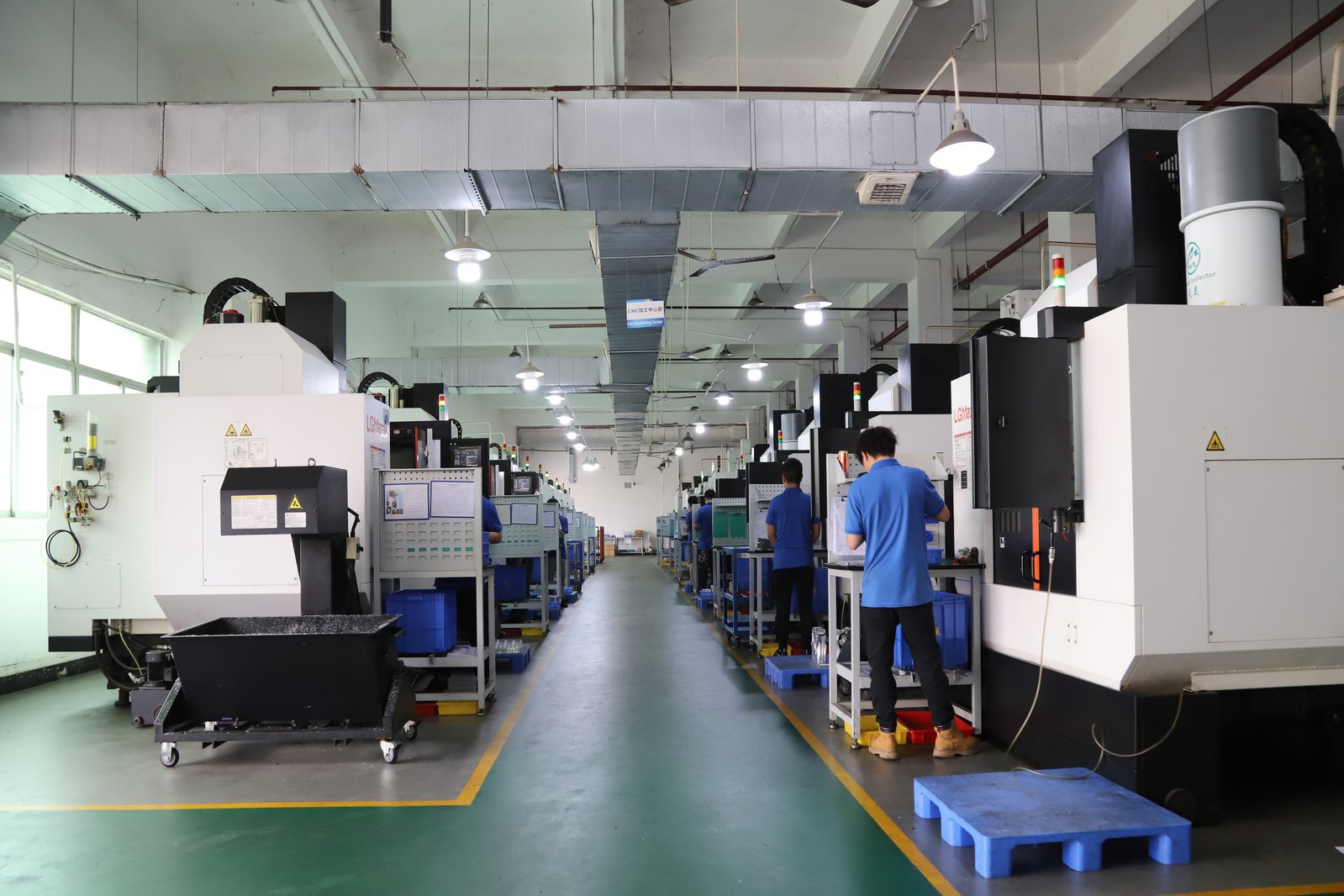
Most machined prototypes come down to one of two material families: aluminum or stainless steel. Each machines beautifully, each finishes in predictable ways, and each can hold the tolerances a drawing demands, which is why the choice is not about machinability but about what the prototype must prove. A part that will live as stainless in production should not be validated in aluminum, and a weight-critical design should not be built in steel just because it was easier to source. This guide walks the decision the way an engineer actually makes it: function first, then grade, then the machining, finishing, cost, and verification realities of each family.
Why is the aluminum-versus-stainless choice the first fork on most prototype drawings?
Because the two families represent opposite ends of the mechanical spectrum that most parts occupy. Aluminum is the lightweight, fast-machining, economical end — roughly a third of steel's density, with good stiffness per unit weight, natural corrosion resistance that anodizing extends, and cycle times that keep prototypes fast and cheap. Stainless is the strong, tough, corrosion-resistant end — heavier, slower to machine, more expensive in stock and in cycle time, but able to carry loads and survive environments that aluminum cannot.
The fork matters because the material decides what the prototype can validate. A bracket that will be produced in stainless cannot have its load path proven in aluminum, because the aluminum part will flex and fail where the stainless one would not. A housing designed for aluminum's weight budget cannot be tested in steel, because the added mass changes the very property being measured. When a drawing does not force the family, the prototype is the cheapest place to confirm the choice, and when it does, the prototype must match the production material or limit itself to geometry and fit validation.
Which aluminum grades should a prototype consider, and what does each deliver?
Aluminum is not one material, and the grade changes what the prototype proves. The table below maps the common grades to their role in a prototype.
| Grade | Prototype role | What it delivers | Watch out for |
|---|---|---|---|
| 6061-T6 / -T651 | The default for most machined prototypes | Fast cutting, good threads, clean anodizing, universal availability | Moderate strength only, not for high-load validation |
| 7075-T6 / -T7351 | High-strength prototypes and thin machined sections | Roughly double 6061's strength; -T7351 holds thin sections without distortion | Costlier, slower to machine, more brittle at edges |
| 2024-T3 / -T351 | Legacy aerospace designs and fatigue-critical parts | High strength and good fatigue performance | Poor corrosion resistance — needs protection; less common in stock |
| 6082 / 6063 | European standards and cosmetic extrusions | Similar behavior to 6061; 6063 anodizes to a bright finish | Check which standard your drawing names |
Two rules keep the choice honest. First, prototype in the grade you intend to produce in when the test is mechanical; a 6061 part cannot represent the stiffness of 7075 or the machinability of 2024. Second, name the temper as well as the grade — -T6 and -T651 differ in stress relief, and a thin machined section drawn from -T6 plate can distort as residual stress is released. The drawing should say "7075-T7351" and the certificate should match, because the temper is part of the material story.
Which stainless grades should a prototype consider, and what does each deliver?
Stainless covers an even wider spread, and picking the wrong end of it is a common prototype error. The grades below are the ones that appear on most machined prototype drawings.
| Grade | Prototype role | What it delivers | Watch out for |
|---|---|---|---|
| 303 | The free-machining prototype default | Fast cutting, clean finish, economical stainless prototyping | Lower corrosion resistance than 304/316 — check the environment |
| 304 / 304L | General corrosion-resistant service | Good corrosion resistance and formability; the standard general grade | Tougher to machine than 303; chips and work-hardening need care |
| 316 / 316L | Salt, chemical, and medical environments | The corrosion workhorse, with molybdenum for pitting resistance | Slower cutting; premium over 304 in stock and cycle time |
| 17-4PH | High-strength prototypes that must validate strength | Machines in the annealed state, ages to high strength in H900-H1150 | Heat-treatment step in the route, with a certificate and finish machining |
The pattern to notice is the trade inside the family: 303 machines fast but protects less, 316L protects most but machines slowest, and 17-4PH exists precisely because neither gives the strength a structural part needs. When a prototype's purpose is corrosion validation, the grade must match the production environment exactly, because the molybdenum content is the difference between surviving and pitting. When it is strength, 17-4PH in the production age condition is the only honest choice. When it is geometry, the fastest-machining grade that represents the production one is usually enough.
How do the two families compare on the properties that decide a prototype's test?
The decision usually reduces to a short list of properties, and the two families sit on opposite sides of each one. Weight is the obvious fork: aluminum weighs roughly a third of steel, so a part that must be light, or that is mounted where mass matters, points to aluminum before any other consideration. Strength favors stainless at equal section, but the comparison is not equal-section — a thicker aluminum section can match a thin steel one at lower weight, which is why structural design compares the families by stiffness and strength per weight, not by raw numbers.
Corrosion favors stainless in aggressive environments, with anodized aluminum as the lighter alternative where the environment allows a coating. Temperature favors stainless, which keeps its strength far higher than aluminum's working range; conductivity and cost favor aluminum. The engineering move is to list the prototype's test requirements — load, environment, weight budget, temperature, conductivity — and score each family against them. When the requirements split evenly, prototype both and let the test decide; when they point one way, the decision is made before the quote, not after the first failure.
How do machining, tolerances, and finishing differ between the two families?
Both families machine to the same tolerance bands — production milling and turning hold fit and alignment features to ±0.003 mm, precision grinding reaches ±0.002 mm, and Cpk of 1.67 or higher is the standard on key characteristics — but the path to the band is different. Aluminum cuts fast with light finishing passes, which keeps thin walls and detailed features cheap; stainless cuts slower, work-hardens if the feed stalls, and rewards consistent chip load, which prices its cycle time accordingly. The geometry a supplier can hold is the same; the time and cost to hold it are not.
Finishing differs by family in ways that affect the prototype. Aluminum is anodized by class for corrosion, wear, or cosmetic consistency, with hard anodize for wear surfaces and conversion coating where electrical conductivity must survive. Stainless is passivated to remove the free iron that machining embeds, restoring its corrosion resistance; plating appears only where conductivity or a specific surface is required. Each finish has its own process record, and on a prototype the certificate matters less than the callout matching the purpose — a functional test part may run bare while a customer demo carries the full treatment.
Two machining realities shape prototype behavior in ways worth knowing before the quote. Aluminum rewards aggressive feeds and light cuts, which keeps thin-wall features fast and cheap, but its softness means small tapped holes and fine threads are fragile, and an aluminum prototype that strips a thread during assembly has told you the production part needs a thread insert or a thicker boss. Stainless punishes hesitation: an interrupted feed lets the material work-harden under the tool, dulling the edge and pushing the next cut, which is why stainless prototypes carry slightly longer cycle times and why the supplier's feed strategy matters as much as the machine. Neither reality changes what tolerance the process holds — both machine to ±0.003 mm with grinding at ±0.002 mm — but it changes what a prototype will reveal during assembly and testing, which is the kind of detail a DFM review should surface before you commit.
What happens to the prototype-to-production decision if you switch materials later?
Switching families between prototype and production is the most expensive lesson a prototype program can learn, because the switch invalidates the data. Geometry and fit may survive a change from aluminum to stainless — the dimensions are the same — but mechanical test results do not: the stainless part is stiffer, stronger, and heavier, so a load test on an aluminum prototype says nothing about the production part. Conversely, a production switch from stainless to aluminum for weight will fail if the design was validated without the aluminum part's lower stiffness in the load path.
The rule is to decide the prototype's purpose before the material. If the test is geometry, assembly, or electronics fit, a fast-machining stand-in is acceptable and the switch is harmless. If the test is strength, stiffness, corrosion, thermal, or any material-dependent behavior, the prototype must run in the production grade and condition, because that is the only way the data transfers. When a design is genuinely undecided between families, prototype both — the cost of two parts is trivial against the cost of discovering the wrong choice after production tooling is committed.
Cost and lead time: how do the two families compare at the prototype stage?
At the prototype stage, aluminum is cheaper on both the cost and schedule levers. The stock costs less, the machining runs faster, and the tooling lasts longer, so the material and machine-time lines both favor it; a stainless prototype adds cost in the stock and multiplies it in the cycle time, with 316L and 17-4PH at the expensive end of the spread. On lead time the gap is smaller — standard grades of both families sit in stock — but a stainless part with a heat-treatment step such as aged 17-4PH moves toward the longer tiers because of the process sequence.
The comparison only matters when the choice is not forced. When the application does not demand stainless, aluminum gives you more prototype iterations for the same budget, and iteration is the entire purpose of a prototype. When the application does demand stainless, choose the grade by the test and accept the cost, because a cheaper prototype in the wrong material is the most expensive prototype you can buy. The honest question is always the same: what must this prototype prove, and which family can prove it?
How do you document the decision and verify the material arrived as specified?
A material decision is only as good as the certificate that confirms it, and on a prototype the check is cheap insurance. Require the material certificate with the heat or lot number, and confirm the supplier verifies the incoming stock against it with an alloy check such as XRF before machining — a part machined beautifully from the wrong grade will fail the very test the prototype exists to run. When the drawing names a temper or age condition, the certificate should confirm it, and the heat number should follow the work order so the part traces to the specific stock it was cut from.
Keep the decision record with the prototype. Note why the family and grade were chosen, what the prototype was meant to validate, and whether the test confirmed or challenged the choice, that record is what the production material review will ask for, and it turns the prototype from a single part into the documented basis for the next decision. The parts guide shows how material, tolerance, and finish callouts land on a quoted prototype, and the FAQs cover material verification and the documentation that ships with the parts.
Frequently Asked Questions
Should I choose 6061 or 7075 aluminum for my prototype?
6061-T6 is the default for most machined prototypes — fast, economical, good threads, clean anodizing. Choose 7075-T6 when the prototype must validate strength 6061 cannot represent, and -T7351 for thin machined sections that must hold dimension. For a geometry or fit test, 6061 is faster and cheaper; for a strength test, prototype in the production grade.
When does corrosion make stainless the right choice over aluminum?
When the part sees salt, chemicals, washdown, or fluids that aluminum's anodize cannot defend indefinitely, or when a coating is not acceptable. Within stainless, 316 and 316L are the corrosion workhorses; 304 covers general service; 303 is the free-machining compromise for lighter corrosion demands. Name the environment on the drawing and the grade follows.
Do I need to prototype in the production grade?
It depends on what the prototype must prove. A fit, assembly, or geometry check can run in a fast stand-in such as 6061 even when production is stainless. A strength, corrosion, or material-behavior test must run in the production grade, because the stand-in tells you nothing about the production material's performance. Decide the purpose first, then the material.
Which family handles thin walls and small threads better?
Aluminum machines fast and holds good threads in moderate sections, but it is soft — small tapped holes and thin walls strip and deform more easily. Stainless is tougher and holds fine threads and thin walls under load, but it cuts slower and work-hardens. For fine threads or thin load-bearing walls, stainless is often the safer engineering choice despite the machining cost.
Which family is cheaper to prototype?
Aluminum, in almost every case — cheaper stock, faster machining, longer tool life. Stainless adds cost in the stock and the cycle time, with its grades spreading from economical 303 to tougher 316L. When the application does not force the choice, prototype in aluminum first and reserve stainless for the parts and tests that genuinely need it.
What finish should each family carry on a prototype?
Aluminum prototypes are anodized when they need corrosion, wear, or cosmetic consistency, by class; stainless prototypes are passivated to remove embedded free iron. Plating is reserved for conductivity or specific surfaces. Match the finish to what the prototype must test — a functional part may run bare where a demo needs the full treatment.
How do I verify the prototype is actually the grade I specified?
Require the material certificate with the heat or lot number, and confirm the supplier verifies the incoming stock against it with an alloy check such as XRF before machining. On a prototype the certificate is cheap insurance, because a part machined from the wrong grade will fail the very test it exists to run. Check the grade on the certificate against the drawing.
Not sure whether your prototype should be aluminum or stainless?
Email [email protected] or call +86 13126536955 for a material recommendation tied to what your prototype must prove.